Why Spanish Is So Common in Miami
Miami is often described as the gateway to Latin America—and for good reason. With strong cultural ties to countries like Cuba, Venezuela, Colombia, Nicaragua, and the Dominican Republic, Spanish is not just a second language in Miami—it’s often the first. This linguistic influence began in the 1960s, when a large wave of Cuban immigrants settled in the city, especially in neighborhoods like Little Havana and Hialeah. Over time, these areas became hubs of Hispanic culture, helping to shape Miami into the bilingual city it is today.
Most Miami Residents Are Bilingual
In Miami, it’s incredibly common for people to speak both Spanish and English fluently. From business professionals and hotel staff to restaurant servers and rideshare drivers, most residents switch between languages effortlessly. While English is widely spoken, being able to understand or speak a bit of Spanish will help you connect more easily and navigate your surroundings with confidence.
Where Spanish Is Spoken the Most
If you’re visiting Little Havana, expect to hear conversations in Spanish all around you. This historic district is home to Cuban bakeries, cigar shops, and lively domino parks where locals gather daily. Likewise, Hialeah is one of the most predominantly Spanish-speaking cities in the United States, with the vast majority of residents using Spanish as their primary language.
Helpful Spanish Phrases to Know
Here are a few simple phrases that can make a big difference:
- Good Morning – Buenos días
- Hello – Hola
- Goodbye – Adiós
- Do you know how to speak English? – ¿Sabes hablar inglés?
Learning just these few phrases shows respect and often encourages locals to respond warmly and helpfully.
Rideshare and Service Workers Are Often Spanish-Speaking
Many of the Uber and Lyft drivers in Miami are Latin American immigrants or first-generation Americans, so Spanish is their first language. While most can speak basic English, using Spanish greetings or directions might help clarify your route or make the ride more pleasant.
Dolphin Swim Miami and Language Use
If you’re planning to swim with dolphins in Miami, especially at locations like the Miami Seaquarium, you’ll notice that many of the support staff are Latin American and speak Spanish primarily. This includes receptionists, photographers, and guides who help you check in and prepare for your program.
However, the dolphin trainers themselves are almost all Anglo, and they communicate the program instructions and safety guidelines in English. This means you’ll need to understand basic English directions when you’re in the water with the dolphins to ensure a safe and enjoyable experience.
Swim with Dolphins in Miami
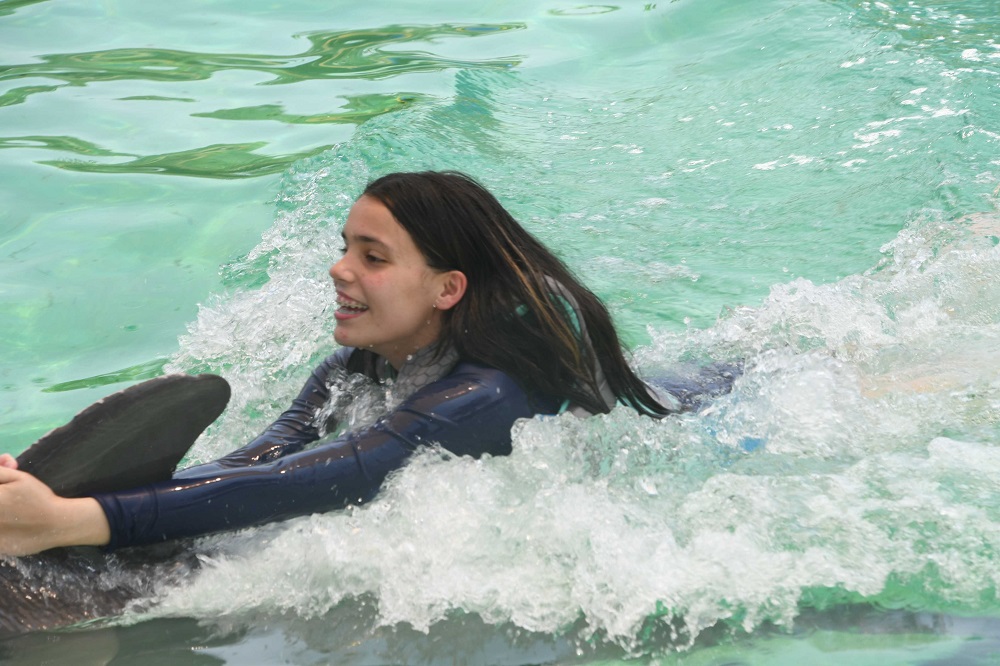
Whether you choose the Dolphin Swim Odyssey, where you can swim in deep water and enjoy rides with the dolphins, or the Dolphin Encounter, which is a shallow-water experience perfect for non-swimmers, your adventure will be unforgettable. The Miami Seaquarium offers both programs, combining marine education, animal interaction, and family fun.
Why Knowing Spanish Makes Your Vacation Easier
While it’s certainly possible to have a great vacation in Miami speaking only English, knowing even a little Spanish will make your trip smoother and more engaging. From ordering food and asking for directions to greeting locals and navigating your dolphin program, basic Spanish can go a long way.
Miami is a city where cultures blend and languages flow. Embracing a few Spanish phrases not only helps you connect with the locals—it enriches your overall experience, especially when swimming with dolphins and exploring the vibrant neighborhoods of this bilingual city.
